
From Greeks to Exposure: How Options Positions Add Up

TL;DR
- A Greek describes a sensitivity for an option.
- Exposure scales that sensitivity by position size and contract multiplier.
- To get net exposure, add signed positions in consistent units.
Start With One Contract
Say a call has Delta 0.40. On a standard 100-share contract, that translates to 40 share equivalents. A small stock price increase of $1 adds about $40 to the value of that long contract, if other inputs stay fixed.
Why 40 and not 0.40? The option premium is quoted per share, while your position is a whole contract. Multiply 0.40 by the 100-share multiplier to translate the per-share sensitivity into the sensitivity of what you own. If your contract uses a different multiplier, use that one instead.
Scale Up and Keep the Signs
Multiply the Greek by the contract multiplier and the number of contracts. Give long positions positive quantities and short positions negative quantities. Keep the original Greek sign too. A long put’s Delta is already negative, so a short put contributes positive Delta.
Add only quantities that answer the same question. Delta in shares and Gamma in shares per $1 move belong in different totals.
Try writing the units beside each step. Delta of 0.40 times 100 shares per contract gives 40 share equivalents per contract. Three long contracts contribute three times that amount. Use the same multiplier and sign logic for each series before combining the results.
Add Two Positions
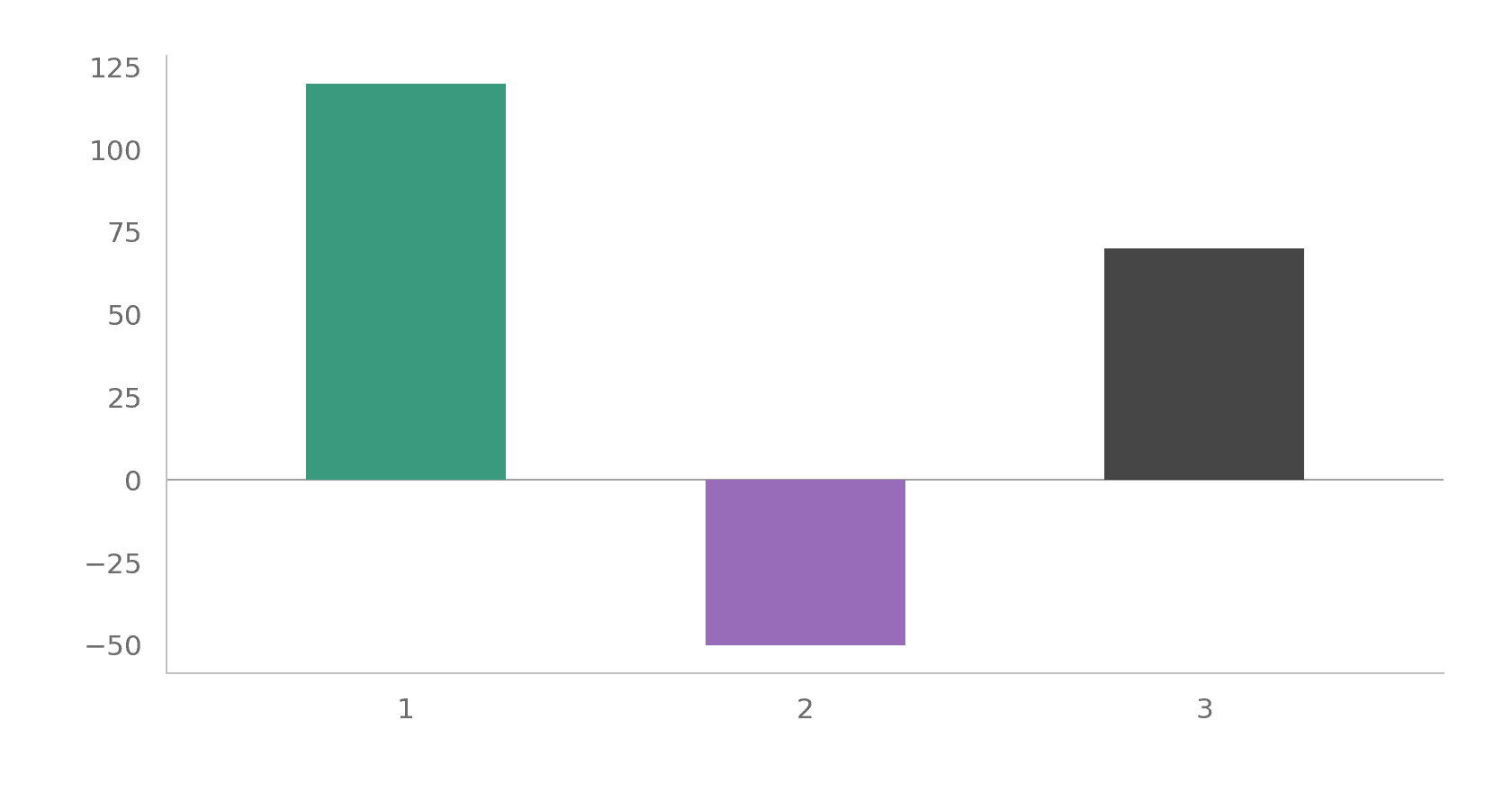
You own three calls with Delta 0.40 and two puts with Delta −0.25. All contracts have a 100-share multiplier. The calls contribute +120 share equivalents. The puts contribute −50. Net Delta is +70, meaning a small $1 stock rise adds about $70 to the portfolio’s theoretical value, all else equal.
The net number hides offsets. Keep the breakdown if you want to see how much each position contributes.
If you sold the two puts instead of buying them, their contribution would flip from −50 to +50. Your net would become +170 instead of +70. The puts themselves still have negative Delta. What changed was which side of those contracts you held.
What to Remember
You can calculate exposure directly for positions you know. For a market-wide estimate, someone has to supply assumptions about who holds each side. That choice can change the sign of the result.