
Option Premium: Intrinsic Value and Time Value Explained

TL;DR
- Premium is the option’s price.
- Intrinsic value comes from the stock price relative to the strike.
- Time value is the part of the premium above intrinsic value.
What Are You Paying For?
An equity option quoted at $5 usually costs $500 for one standard 100-share contract, before fees. That price is the premium. You can break it into two parts to see how much value comes from the stock’s current price and how much sits above that amount.
You’ll see two prices when looking at an option. The strike is the price the contract lets you buy or sell the shares for. The premium is the price of the contract itself. Buying the option means paying the premium upfront, even if you never exercise it.
Where Does the Rest of the Premium Come From?
For a call, intrinsic value is the stock price minus the strike, floored at zero. For a put, it’s the strike minus the stock price, also floored at zero.
Subtract intrinsic value from the premium and you get time value, also called extrinsic value. Time remaining and implied volatility help explain why someone might pay for a contract with no intrinsic value today.
An option can have a premium with zero intrinsic value. Say the stock is $103 and a call has a $105 strike. The right to buy at $105 gives you no advantage today, but the stock has time to move above $105. Any premium on that call is time value.
Break Down a $5 Call
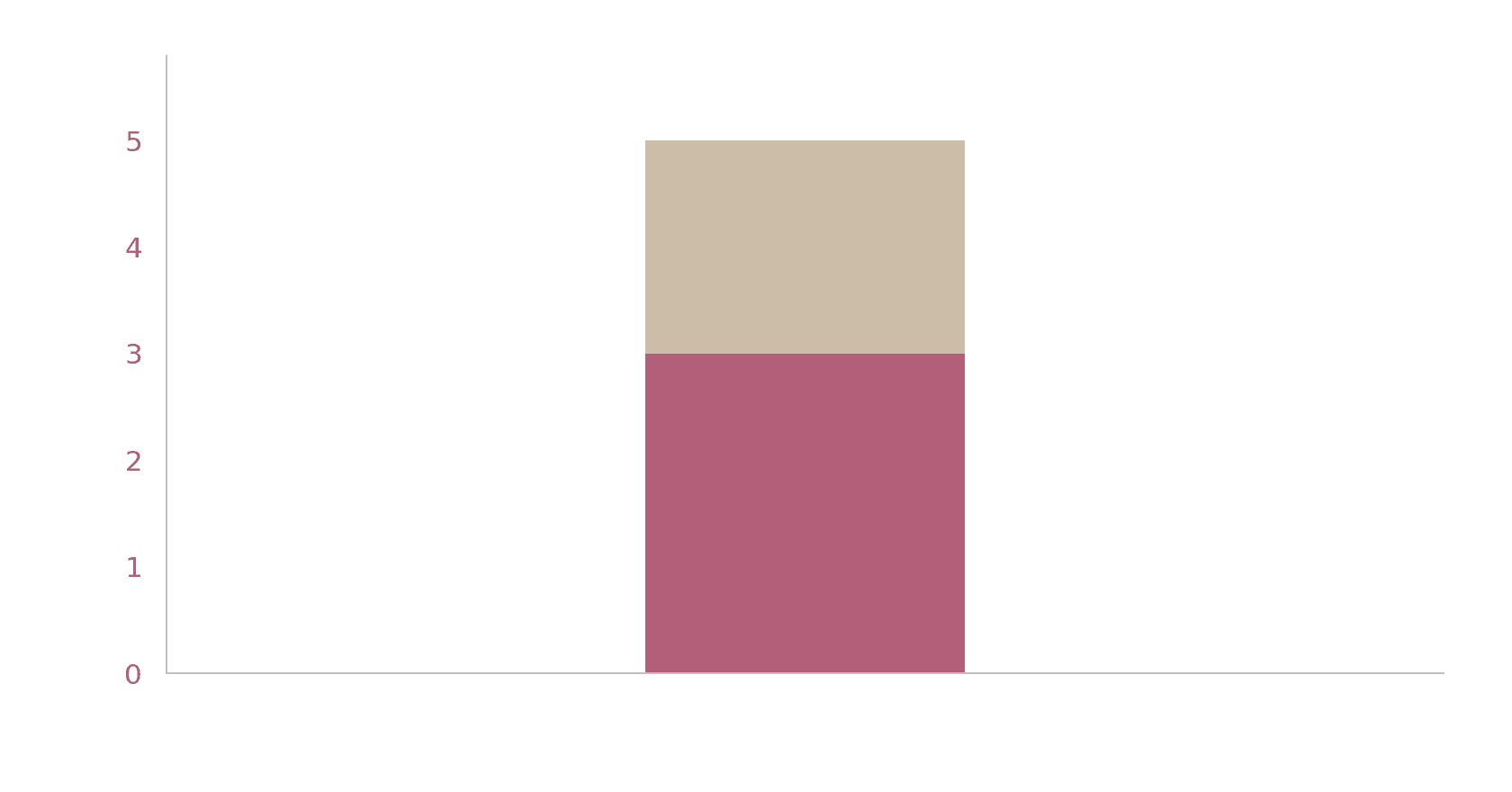
Suppose the stock is $103 and a $100 call trades at $5 per share. The right to buy at $100 has $3 per share of intrinsic value. The other $2 per share is time value. For a standard contract, that’s $300 of intrinsic value and $200 of time value.
If the stock is still $103 at expiration, the call is worth $3 per share. The $2 per share of time value is gone, so buying at $5 and holding to expiration produces a $200 loss before fees.
Suppose you sell the $100 call before expiration for $5.50 per share. You paid $5, so the difference is $0.50 per share, or $50 per standard contract before fees. The same contract can have one outcome when you sell it early and another if you hold it to expiration.
What to Remember
The quoted premium is what you pay today. Intrinsic value helps you see how much of that price comes from where the stock trades now. The rest can change before expiration as the market reprices the option.