
Strike Price and Moneyness: ITM, ATM, and OTM Explained

TL;DR
- Strike is the price written into the contract.
- Moneyness compares the stock price with the strike.
- An option can be in the money and still lose money for its buyer.
Which Price Does the Contract Use?
Say a stock is trading at $103 and you own a $100 call. The $103 is the current stock price. The $100 is your strike, the price at which the call lets you buy the stock. The strike stays fixed for that contract even as the stock price moves.
An options chain can list several strikes for the same expiration. A $100 call and a $105 call are separate contracts, even if they expire together. If the stock moves from $103 to $104 after you buy the $100 call, you still have the right to buy at $100. What changes is how valuable that right is relative to buying the shares at market.
What Makes an Option In the Money?
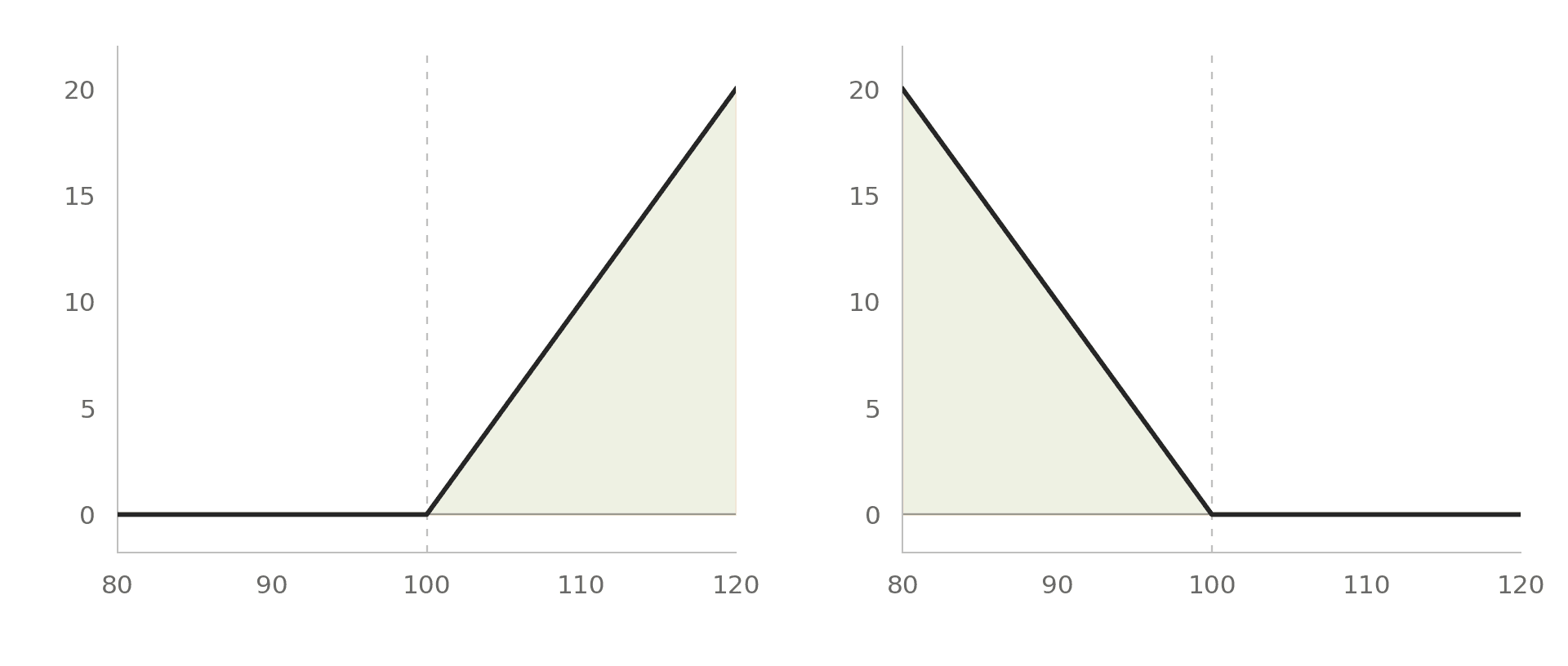
A call is in the money when the stock is above its strike. A put is in the money when the stock is below its strike. When stock and strike are equal, the option is at the money. In conversation, people often use ATM for the listed strike closest to the current price.
If exercising would provide no advantage over trading the stock at its market price, the option is either at or out of the money.
Ask whether exercising gives you a better price than trading the stock directly. With a call, that means buying for less. With a put, it means selling for more. The same stock price can therefore make a call in the money and the put at that strike out of the money.
One Strike, Three Stock Prices
At a $100 strike, a stock at $103 puts the call ITM and the put OTM. At $100, both are ATM. At $97, the put is ITM and the call is OTM.
Now bring back the $5 premium from Calls and Puts. If the stock finishes at $103, that $100 call has $3 per share of intrinsic value. You paid $5 per share, so you lose $2 per share before fees.
The $100 call breaks even at $105 at expiration before fees. Between $100 and $105, it’s in the money, but you haven’t recovered the full $5 premium. That’s how the ITM label can be right while your trade shows a loss.
What to Remember
Moneyness tells you where the stock sits relative to the strike. Profit also depends on what you paid. Next, look at when the contract ends and why that matters.