
Expiration and 0DTE: What Changes as Time Runs Out?
TL;DR
- Expiration sets the end of an option’s life.
- 0DTE means an option expires that trading day.
- At expiration, there’s no time value left.
What Does Expiration Mean?
Buy a call and you get a right that lasts for a limited time. The expiration date tells you when that right ends. Two contracts on the same stock can share a strike and still behave differently because they expire on different dates.
Expiration gives your idea a deadline. An option that expires today can’t benefit from a move that happens tomorrow. When comparing two contracts, look at how much time each gives your idea before deciding what the different premiums mean.
How Is 0DTE Different?
0DTE stands for zero days to expiration. You might have bought the contract earlier in the week. Once its expiration day arrives, it’s a 0DTE contract. There may still be hours left to trade, and the exact trading and exercise cutoffs depend on the contract and broker.
With little time left, a small move across the strike can quickly change whether the option has intrinsic value.
A contract can be listed weeks before it becomes 0DTE. The label describes the time left today and applies regardless of when the holder bought it. A 0DTE contract at the start of the session also has more time remaining than the same contract just before its cutoff.
Same Strike, Different Time Left
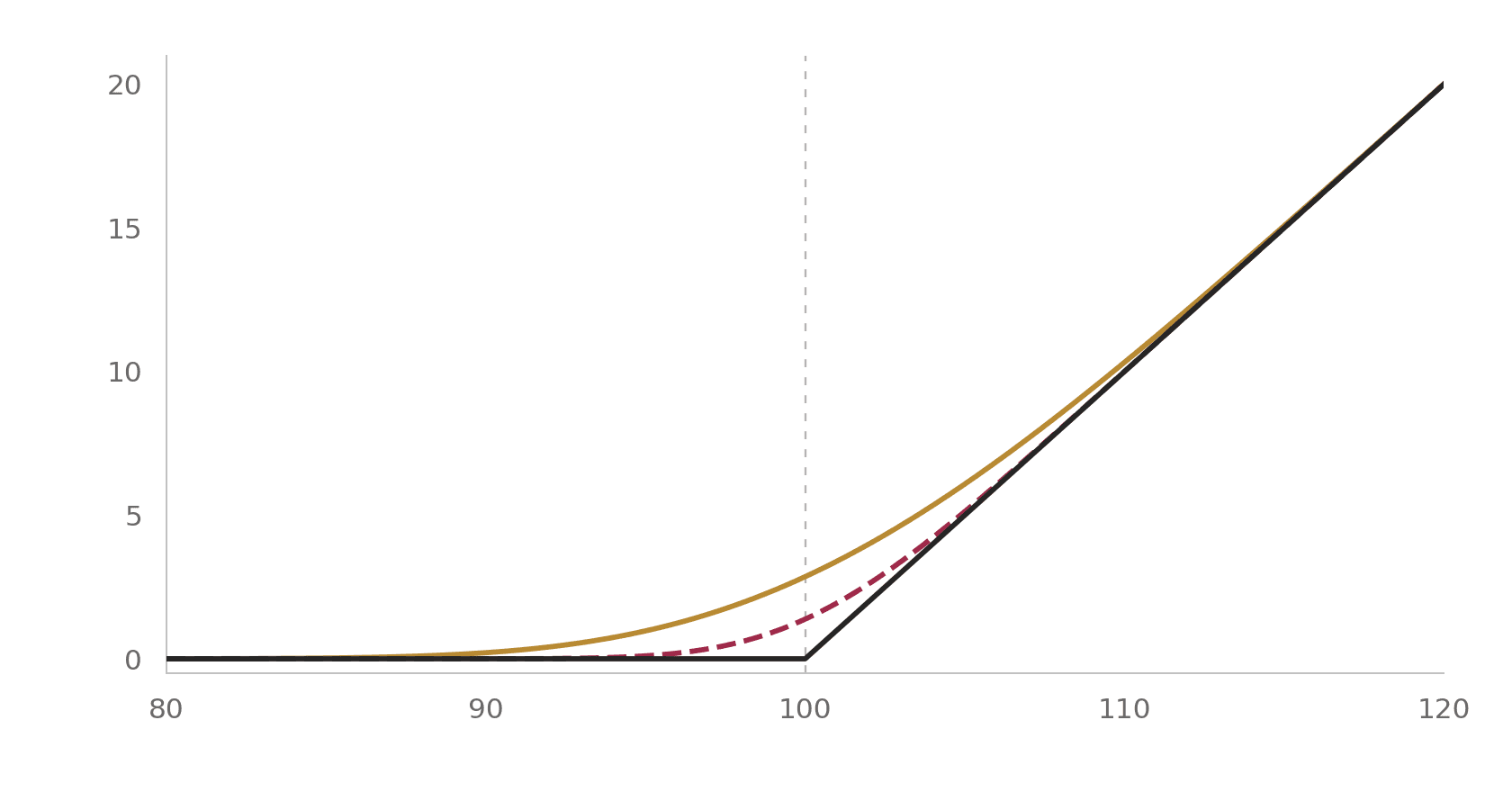
Imagine a stock at $100 and two $105 calls. One expires today. The other expires next month. If the stock ends today at $102, today’s call expires out of the money. The later call is also out of the money at $102, but it still has time left and may retain value.
If you paid $1 per share for today’s call and it expires worthless, you lose $100 on a standard 100-share contract before fees.
If the stock instead finishes at $106, today’s $105 call has $1 per share of intrinsic value. That covers the $1 premium, so the example breaks even before fees. If the stock only reaches $106 tomorrow, today’s contract has already expired. Same move, different outcome.
What to Remember
Start by checking the expiration alongside the strike. Time remaining affects what you’re paying for and how much opportunity the option has to gain intrinsic value.