
What Is Rho? How Interest Rates Affect Options

TL;DR
- Rho estimates how much an option price changes when interest rates change.
- It’s commonly quoted per one percentage point of interest rates.
- Longer expirations often show greater rate sensitivity, all else equal.
Where Do Rates Enter the Picture?
An option can give you the right to exchange cash for shares at a later date. The value today of that future payment depends in part on interest rates. Rho captures how changing the rate input affects the model’s option price.
Think about the fixed strike payment in a call. If you exercise later, you pay that strike price later. A model has to value that future cash amount in today’s dollars. That’s one reason a change in the rate input can change what the option is worth today.
How Do Calls and Puts Respond?
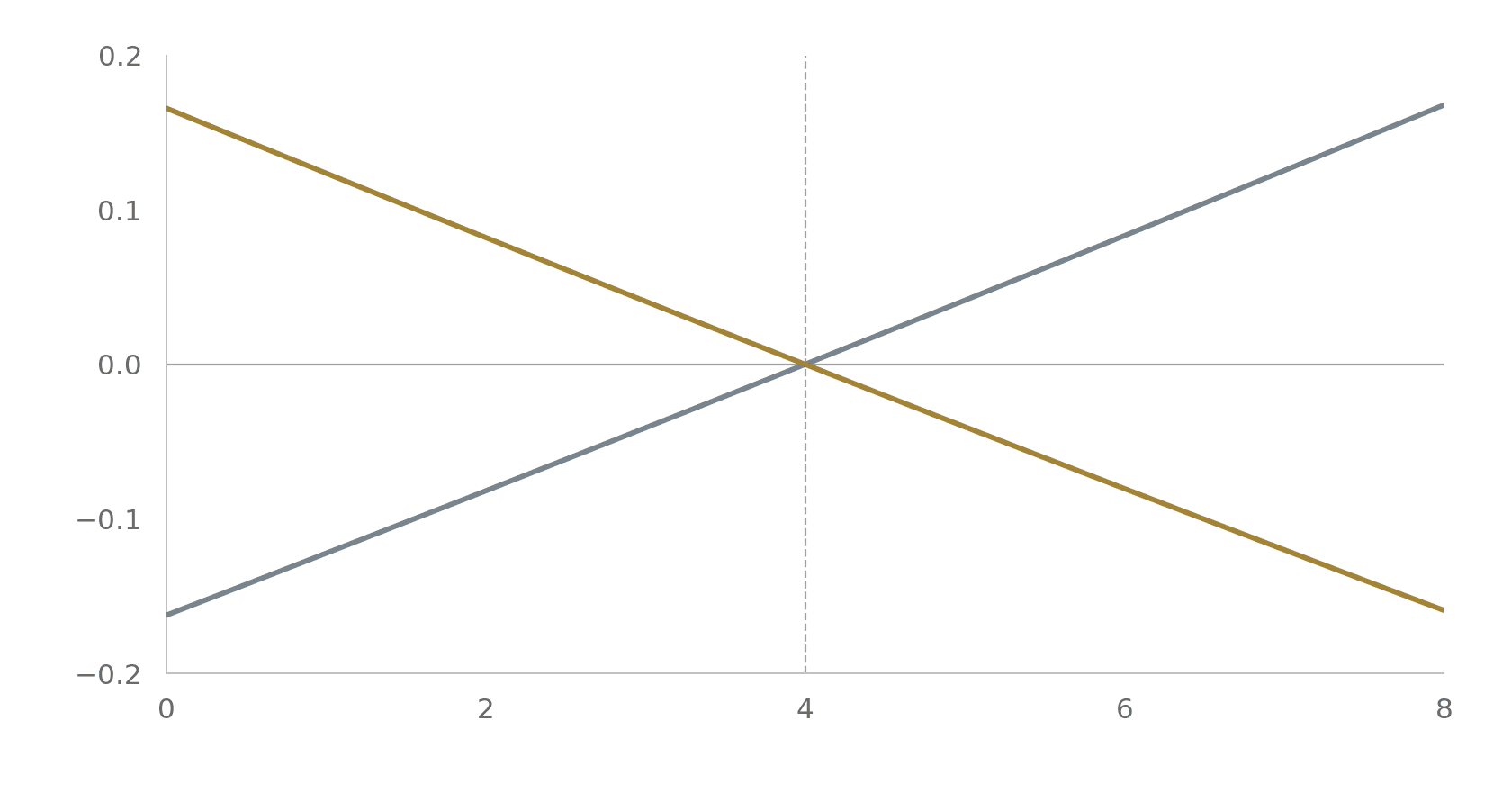
In standard equity option models, higher rates generally increase the theoretical value of a purchased call and decrease that of a purchased put, holding stock price, volatility, time, and dividends fixed. Think of this as isolating one input. In real markets, several inputs may move together.
In the model comparison, the stock itself stays put. A real rate announcement can move both the stock and IV, so the option quote can react in a different direction from the one Rho alone suggests. Rho gives you the contribution from the rate change under the stated assumptions.
Rates Rise Half a Point
Say a call has a Rho of $0.12 per share per rate point. If the rate input rises from 4.0% to 4.5%, the option gains about $0.06 per share in the model, or $6 for a standard 100-share contract. A move of half a percentage point uses half the quoted sensitivity.
Here’s the unit check. A move from 4.0% to 4.5% is a change of 0.5 percentage points. Multiply 0.5 by $0.12 to get $0.06 per share, then multiply by 100. The result is an estimated change in the premium, not a new premium quote.
What to Remember
When you look up Rho, check the rate increment used in the quote. It’s most useful when you want to isolate rate sensitivity, especially when comparing contracts with different expirations.